

Sento and Onsen: How to Use a Japanese Bath House
Rinse before you soak, keep your towel out of the water, never take photos, and ask before cooling the bath. Plus Tokyo's ¥600 sento price from 1 August 2026.
Updated: October 15, 2026. I added the Tokyo Sento Association’s advice on cooling a hot bath and how long to soak, Tokyo’s ten-visit ticket book, and rechecked the ¥600 price and the age-7 rule.
In 30 seconds
- Check the tattoo policy before you go. A private bath is the workaround.
- You bathe naked. No swimwear, no underwear.
- Rinse and wash before you get in. The towel stays out of the water.
- No photos. Your phone stays in the locker.
- Too hot? Ask the others before you turn on the cold tap.
You wash before you get in, your towel never touches the water, and you never take a photo. Almost every other rule in a Japanese bath house follows from one idea: the water and the room are shared.
I was never taught how to use a public bath. You go with your family when you’re small, and by the time you notice there are rules, you’ve absorbed them. Ask me why the towel stays out of the water and I’ll pause, because the honest answer is “you just don’t.” So I worked out the reasons, not just the rules: a rule you understand is one you’ll remember when it matters, standing naked in a room full of strangers. A handful of things will get you a look, and two carry more weight than the rest.
Sento, onsen or super sento: what kind of bath is it?
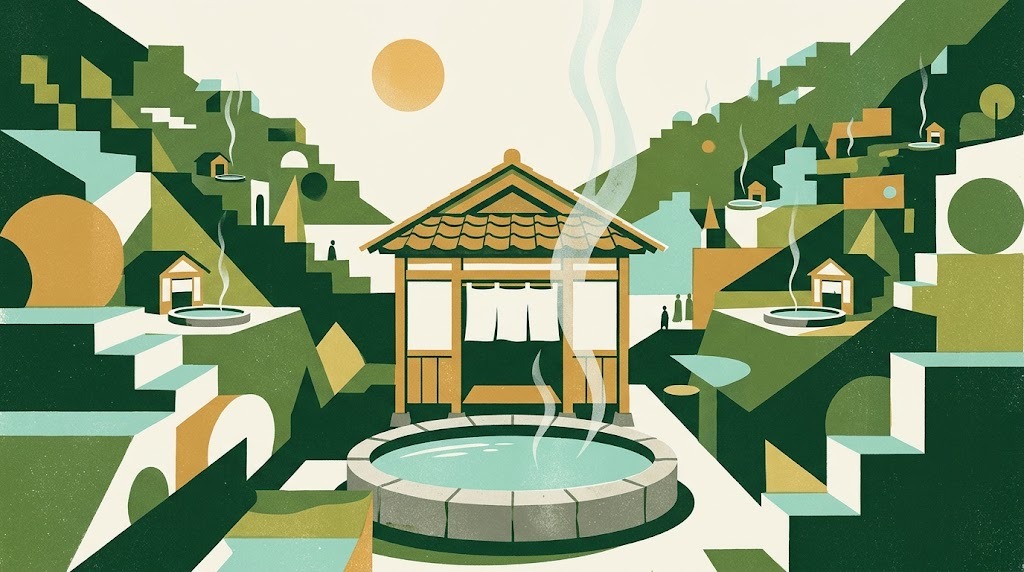
A sento is a neighbourhood public bath, an onsen uses water that legally counts as a hot spring, and a super sento is a large leisure complex.
The three words mean different things, and the difference decides who sets the price and what is in the water.
Sento (銭湯)
A sento is a neighbourhood public bath. In Tokyo, the price is not up to the owner: the governor sets the maximum under the national Price Control Ordinance.
Tokyo sento, from 1 August 2026 (up from ¥550), according to Shinjuku City and Nerima City.
If you’ll use a few, Nerima City points to a book of ten tickets for ¥5,400 (¥540 a visit), valid at about 420 Tokyo sento until 30 June 2027. Other prefectures set their own prices, so a sento in Osaka or Niigata will not necessarily cost ¥600. Saunas can cost extra: the Tokyo Sento Association tells bathers to ask at the desk.
Onsen (温泉)
An onsen is a hot spring, and it is a legal definition, not a marketing word. Under the Hot Springs Act, water from underground counts as an onsen if it is at least 25°C when it is drawn, or if it contains enough of one of the minerals or gases listed in the Act’s table. That “or” matters: a cold spring rich in minerals is legally an onsen, and so is 25°C water with very little in it.
Super sento (スーパー銭湯)
A super sento is the modern leisure version: a large complex with several baths, saunas and a restaurant. Prices and opening hours are set by each facility, so check its own page.
The etiquette below is the same in all three. If you want to see how neighbourhood baths work somewhere very different from Tokyo, my guide to Beppu’s ¥100 neighbourhood baths covers the ones visitors may and may not enter.
Before you go: three things to sort out first
Check the tattoo policy, accept that swimwear is not an option, and know that you don’t need to bring anything.
Check the tattoo policy — really check it
Tattoo rules differ from one facility to the next, and they are the one thing to check before you travel. The Japan Tourism Agency explains the background plainly: many Japanese people associate tattoos with organised crime, which is why people with tattoos have been banned from most public bathing facilities. You’ll meet three positions:
Some ryokan have no tattoo rules at all, according to the Japan Tourism Agency.
The agency gives the example of one or two small tattoos being accepted; ask before you go.
Still the rule at many public bathing facilities.
The workaround is a private bath. Look for kashikiri-buro (貸切風呂), a bath you reserve for a set time, or a room with its own bath. The Japan Tourism Agency says guests with tattoos can use these private baths with no issue. To check ahead, this is the phrase to send or show:
Send or show this at the front desk
タトゥーがありますが、入浴できますか?
Tattoo ga arimasu ga, nyūyoku dekimasu ka?
“I have tattoos — am I able to bathe here?”
Know that swimwear is not an option
You bathe naked: not in swimwear, not in underwear, not wrapped in a towel. The Japan Tourism Agency asks guests not to wear a swimsuit or any other clothing into the bath, and the Tokyo Sento Association says keeping your underwear on is not allowed either.
Here’s the honest reassurance: everyone in the bathing area is naked, and staring is the thing that is rude here, not nudity.
A few mixed baths and leisure facilities have their own rules on bathing wraps or swimsuits; follow the sign at the door. The default is naked.
You don’t have to bring anything
You don’t need to pack a bath kit: the Tokyo Sento Association says most Tokyo sento sell small soaps, shampoo and towels, and some sell a bath set.
The actual process, step by step
Shoes off, pay, undress completely, rinse, then soak and wash — in an order that protects the water.
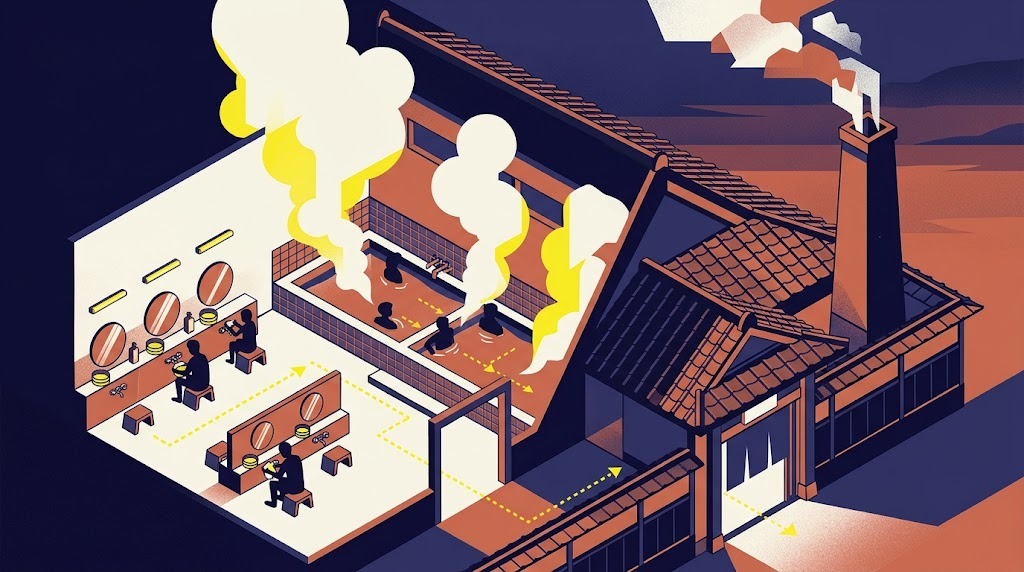
- Shoes off at the entrance.Put your shoes in the shoe locker and take the key with you.
- Pay, then find your changing room.Payment is at a front desk or, at older sento, at a bandai (番台), the raised attendant’s seat; some sento sell tickets from a machine. The Tokyo Sento Association notes that the split is usually marked 男 (men) or 女 (women) on the curtain or door, so read the character, not the colour.
- Undress completely in the changing room.Everything goes in the locker, including underwear. Lock it and wear the key on your wrist, as the Tokyo Sento Association suggests. Take your small towel. Leave your phone in the locker. Tie long hair up so it can’t touch the water.
- Rinse first.Fill a basin from the tap and pour it over yourself. This is kakeyu (掛け湯). The Japan Tourism Agency recommends it because some baths are very hot and getting in too quickly can cause a sharp rise in blood pressure.
- Wash with soap before you soak.The Japan Tourism Agency asks you to wash your entire body before you enter the bath. If you use the shower, mind the person next to you: the Tokyo Sento Association warns that it is easy to spray them until you’re used to it.
- Get in slowly.Your towel does not go in the water. Fold it on your head or set it on the edge of the bath.
- Dry off before the changing room.The Tokyo Sento Association asks bathers to towel off, soles of the feet included, before stepping back onto the changing room floor.
The Tokyo Sento Association’s own guide puts the steps in a different order: rinse, soak, then wash. It still recommends washing before you soak, and says anyone who skips the wash should rinse thoroughly first. Either way, the bath is for soaking, not for cleaning, because everyone shares the same water.
In the water: what not to do
Keep your voice down, keep your head and towel out of the water, and don’t stare.
The Japan Tourism Agency asks bathers not to talk too loudly.
- Conversation is fine; volume is not.
- No swimming, no splashing, no going underwater.
- Don’t wash in the bath. Japan’s Ministry of Health, Labour and Welfare hygiene guideline tells operators not to allow it.
- Eyes at face level or on the water.
Saunas and cold plunge pools (mizuburo, 水風呂) have their own house rules, usually posted at the door.
Too hot? Ask before you add cold water
At a Tokyo sento, ask the people already in the bath before you turn on the cold tap.
Sento water is often hotter than a home bath, and the Tokyo Sento Association says that if you really can’t bear it, you may cool it with cold water, but only after asking the others in the bath; turning on the cold tap without asking starts arguments.
That one rule is the whole philosophy in miniature: the temperature isn’t yours to set, because the water isn’t yours.
How long to stay in
Get out sooner than you think you need to.
The Tokyo Sento Association suggests about 5–10 minutes in a hot bath and about 20 in a lukewarm one, and asks bathers to drink water before and after, and especially before.
In a winter warning about older people bathing at home, Japan’s Consumer Affairs Agency advises keeping the water at 41°C or below and soaking for no more than 10 minutes, and notes that ten minutes at 42°C can raise body temperature to close to 38°C. The same warning advises standing up slowly when you get out, because rising suddenly from the water can cause a brief loss of consciousness. If you feel faint, get out and sit down.
Two rules with more weight behind them
Everything above is etiquette. Get it wrong and you’ll get a look, maybe a quiet word. These two carry more weight: one is a ban, and the other is the rule the national hygiene guideline tells every bath operator to remind you of.
The Tokyo Sento Association bans using phones, games or anything with a camera in the changing room and the bathing area, and warns that taking photos there without the owner’s permission counts as voyeurism, even when the room is empty. Leave your phone in the locker and use it in the lobby.
The Japan Tourism Agency puts it first on its list, and the Ministry of Health, Labour and Welfare’s hygiene guideline asks every bath operator to remind bathers to wash with soap before getting in. The water you would be skipping the wash for is everyone else’s water.
The rule behind all the rules
The water is shared, and the room is shared.
Every rule in this article comes from the same place. Wash first, because the water is shared. Keep your towel out, because the water is shared. Ask before you add cold water, because the water is shared. Keep your voice down, dry off before you walk out, leave the phone in the locker, don’t stare — because the room is shared, everyone in it is more exposed than usual, and the whole thing only works because everyone agrees to protect that. It is the same unspoken attention to the next person that sits under omotenashi, just with fewer clothes.
If you’re ever unsure about something I haven’t covered, ask which choice is more considerate of the next person. I didn’t know I knew that until I tried to explain it, which is more or less the reason this site exists.
Quick answers
- Can my seven-year-old son come into the women’s bath with me?
- Not in Tokyo. Shinjuku City explains that Tokyo’s and Shinjuku’s ordinances do not allow boys and girls aged 7 or over into the opposite sex’s bath; up to age 6, they can go in with you. The national guideline from the Ministry of Health, Labour and Welfare has said “roughly 7 and over” since December 2020, but each local government writes its own rule: Hamamatsu City, for example, lowered its limit from 10 to 7 on 1 October 2023. Check the sign at the entrance.
- Should I have a soak after a few drinks at dinner?
- No. The Japan Tourism Agency asks ryokan guests to avoid the bath in the middle of the night or after heavy drinking. In the same winter warning about older people bathing, the Consumer Affairs Agency advises against bathing straight after a meal, after drinking, or after taking medicine, because a meal or alcohol can lower your blood pressure. Have a glass of water and go in the morning.
- Do I need to book the bath at a ryokan?
- Not the communal bath — the Japan Tourism Agency says it typically needs no reservation, though it closes at set times for cleaning. A private bath you reserve for a set period is different: ask the staff when you arrive.
Prices, age rules, bathing guidance and the legal definition of an onsen checked on 15 October 2026.
— ko, writing from Niigata
Have a Question?