

Skip the Shinkansen: 7 Cheaper Ways to Cross Japan
The 7-day JR Pass is ¥50,000 online or ¥53,000 from agents; Tokyo–Kyoto–Osaka by Nozomi is ¥28,490. Seven cheaper ways to cross Japan, fares checked.
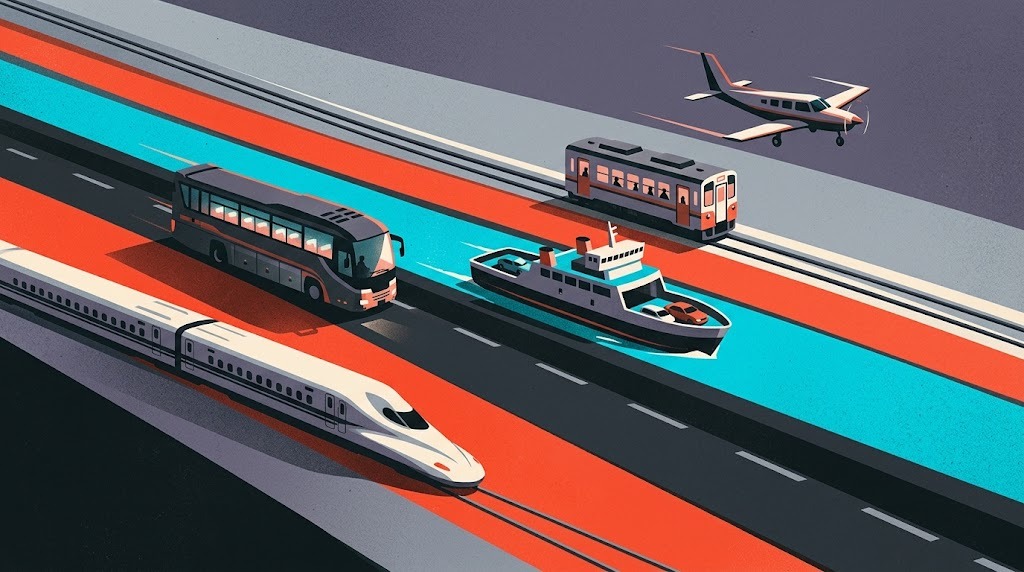
Updated: October 15, 2026. I rechecked the rail and ferry fares against the operators’ own pages: the 7-day JR Pass now costs ¥53,000 from overseas agents (¥50,000 on the official website), Nozomi trains can be ridden with a separate ticket for pass holders, Kintetsu’s Osaka–Nagoya fares are ¥4,790–5,690, JR West’s Kansai Area Pass is no longer sold and its Kansai Mini Pass is sold only through agents outside Japan, and the ferry section now uses MOL Sunflower’s published Osaka–Beppu timetable and fares.
Written by a Japan resident who has taken all of them — including the ones I regret.
For the classic Tokyo–Kyoto–Osaka trip, the 7-day Japan Rail Pass costs more than the train tickets it replaces. The pass is ¥50,000 on the official website and ¥53,000 from overseas agents since 1 October 2026; the two Nozomi legs, Tokyo to Kyoto and Shin-Osaka back to Tokyo, come to ¥28,490 booked on JR’s smartEX service.
That’s more than ¥20,000 handed over for the thing everyone told you to buy.
The JR Pass used to be one of the great travel bargains. It isn’t automatically that anymore, and a lot of English-language advice still assumes it is. I’ve taken the alternatives myself — night buses, budget flights, overnight ferries, private railways, and one very long day on local trains — so this article is a way of deciding, not a list of “cheap options”. The honest answer is that no single method wins for a whole trip; the cheapest trips mix them. These are the seven I cover:
- Regional JR passes instead of the nationwide one
- JR local and rapid trains for short hops, such as Kyoto to Osaka
- Night buses
- Low-cost flights
- Overnight ferries
- Private railways, such as Kintetsu between Osaka and Nagoya
- The Seishun 18 Kippu, a seasonal ticket for JR local trains
One thing before I start: I count cost the way it actually lands on you. Not just the fare, but the airport transfer, the hours you spend waiting because your hotel won’t check you in at 6:00, and the day you lose because you didn’t sleep. Those are real costs, and a lot of articles leave them out.
First, do the math: is the JR Pass actually worth it for your route?
The 7-day pass pays only if your planned JR fares add up to more than its price, and for Tokyo, Kyoto and Osaka alone they don’t. If you skip everything else in this article, don’t skip this section. Some of you will read it and discover the pass is fine for your route, and you can stop reading. That’s a good outcome.
What the pass costs now
The nationwide pass went up on 1 October 2026. JNTO’s notice gives the new prices and says that, for a limited time, the official website keeps the pre-October prices, with the end date still to be announced. On 15 October 2026, the official price page showed both:
| Adult pass | Official website | Overseas agent |
|---|---|---|
| 7 days, ordinary | ¥50,000 | ¥53,000 |
| 14 days, ordinary | ¥80,000 | ¥84,000 |
| 21 days, ordinary | ¥100,000 | ¥105,000 |
| 7 days, Green Car | ¥70,000 | ¥74,000 |
| 14 days, Green Car | ¥110,000 | ¥116,000 |
| 21 days, Green Car | ¥140,000 | ¥147,000 |
Children aged 6–11 have their own, lower prices on the same page. The online price can rise at any time, so check it on the day you buy. For the rest of this section I use ¥50,000, the cheaper of the two.
The Golden Route trap
Tokyo, Kyoto, Osaka is the classic first trip. It’s a great route. It’s also the route where the pass makes the least sense.
On JR’s smartEX booking service, a reserved seat on the Nozomi costs ¥13,970 from Tokyo to Kyoto and ¥14,520 from Shin-Osaka to Tokyo in the regular season, according to smartEX’s fare table. That’s ¥28,490 for both legs. Kyoto to Osaka is a short hop on JR local and rapid trains — you don’t need a bullet train for it.
You’d be paying ¥50,000 to replace ¥28,490 of tickets. smartEX prices move by season, too: ¥200 lower in the off-peak season, ¥200 higher in the peak season and ¥400 higher in the busiest weeks.
There’s a second thing people find out too late: the pass alone does not let you ride the Nozomi, the fastest train on the Tokaido Shinkansen. The pass covers Hikari and Kodama trains. To ride a Nozomi, pass holders must buy a separate Nozomi-Mizuho ticket for each ride before boarding. The full price list gives ¥4,960 from Tokyo to Kyoto or Shin-Osaka, ¥6,500 to Hiroshima and ¥8,140 to Hakata. Pay that on both legs and the pass costs you ¥59,920 for the same trip.
The routes where the pass still wins
The pass rewards distance, not the number of cities. Using the same smartEX Nozomi prices:
- Tokyo → Hiroshima → Tokyo. ¥19,560 each way, ¥39,120 for the round trip — about four-fifths of the pass. A Kyoto stop on the way out still leaves you under it: Tokyo → Kyoto → Hiroshima → Tokyo comes to ¥45,270 on smartEX, so Hiroshima alone doesn’t justify the pass.
- Tokyo → Fukuoka (Hakata) → Tokyo. ¥23,610 each way, ¥47,220 for the round trip — just under the pass on its own. Add a Kyoto stop and the pass pulls ahead, but only on Hikari, Sakura and Kodama trains: Tokyo → Kyoto → Hakata → Tokyo costs ¥54,160 on smartEX, ¥4,160 more than the pass (¥1,160 more if you pay an agent’s ¥53,000). Ride the Nozomi instead and the Nozomi tickets for those three legs add ¥18,490, which puts the pass ¥14,330 behind.
The rough rule: if your planned JR spending for the week is under ¥50,000 (¥53,000 if you buy from an overseas agent), don’t buy the 7-day pass. If you plan to ride the Nozomi, add the Nozomi tickets to the pass price before you compare. Sit down with the fares for twenty minutes before you commit. It’s the highest-value twenty minutes of your trip planning.
Regional passes: check these before the nationwide one
If your trip stays in one region, a regional JR pass can cost a fraction of the nationwide one — but check it’s still on sale, because they change. JR West stopped selling its Kansai Area Pass on 30 September 2026; passes bought by then stay valid.
What’s left for Kansai, at adult prices:
- The Kansai Mini Pass costs ¥3,000 for 3 days of JR West rapid and local trains around Kyoto, Osaka, Kobe and Nara. JR West’s page lists only one way to buy it, an exchange order from a travel agency outside Japan, so sort it out before you fly. Limited expresses such as the Haruka need a separate ticket, and it does not cover the Shinkansen.
- The Kansai WIDE Area Pass costs ¥12,000 for 5 days and adds reserved seats on the Sanyo Shinkansen between Shin-Osaka and Okayama and on limited expresses such as the Haruka. Unlike the Mini Pass, it can also be bought on JR-WEST ONLINE TRAIN RESERVATION.
Both passes are for visitors with a foreign passport entering Japan as a Temporary Visitor, according to JR West.
That’s the second cheap way in this article: for Kyoto to Osaka, a JR rapid train does the job, and the Mini Pass covers it. Regional passes have their own eligibility rules and traps; my guide to JR Pass alternatives goes through them.
Overnight buses: what they’re actually like
A night bus can be the cheapest way to cover a long distance in Japan once you count the hotel night it replaces. Tokyo to Osaka by night bus means boarding late in the evening and arriving early the next morning.
There’s no single price to quote. Operators set fares by date and seat type, so look up your own date on an operator’s page, such as WILLER’s Tokyo–Osaka search, and put it next to the ¥14,520 smartEX Nozomi price above. Remember to add a hotel night to the train side of the comparison.
A lot of English-language advice tells you a night bus is cheap and stops there. Here is what it’s actually like.
4 seats in a row or 3: the choice that decides whether you sleep
Japanese night buses come in tiers, and the difference isn’t marketing. It’s physical.
4 seats in a row is the budget layout: two seats on each side of the aisle, and someone right next to you all night. If you’re tall or broad through the shoulders, expect to be close to your neighbour all night. WILLER’s 4-in-a-row “Relax” seat adds a hood you can pull over your face.
3 seats in a row means one seat fewer across the bus. On WILLER’s seat types page, its 3-in-a-row “Luxia” seat has curtains between seats. That curtain does something psychologically important: it gives you a small private space, which is most of what you need to fall asleep.
My view: if you’re tall, or you have anything scheduled the next morning, pay for the 3-in-a-row seat. I’ve ridden both layouts many times: 4-in-a-row is fine for a shorter hop, but for an overnight Tokyo–Osaka run it’s a gamble with your next day.
Some buses also set seats aside for women. JR Bus Kanto (in Japanese) has women-only seats on some routes, including its Seishun Eco Dream and Gran Dream buses, and WILLER’s search lets you filter for buses with a ladies’ seat policy.
The unwritten rules Japanese passengers follow (and expect you to)
Nobody will announce these in English. But most Japanese passengers on that bus know them, and breaking them is a fast way to make forty people resent you. WILLER does write most of them down, in its bus etiquette guide:
- Phones on vibrate, no calls. And on night buses, WILLER asks you to stop using your phone once the cabin lights go off. Not “dim the screen” — put it away.
- Keep your voice down. WILLER asks for a low voice. After lights-out, I’d save even that for the service area stop.
- Headphones, low volume. Sound leaking from headphones carries in a silent cabin.
- Ask before you recline. WILLER asks you to check with the person behind you. A quick “sumimasen” (excuse me) and a glance back is enough. If they’re already asleep, I’d recline slowly rather than wake them to ask.
- No strong-smelling food. WILLER asks passengers to avoid food or drink with a strong smell or that makes noise. A convenience store onigiri is fine; anything hot or garlicky, eat at the service area.
I’m not writing this to lecture you. These rules exist and are invisible, and the reason behind all of them is the same: on a night bus everyone is trying to sleep in a space that isn’t designed for sleeping, and the only thing that makes it work is that everyone protects everyone else’s rest. Once you see it that way, it stops feeling like a rulebook.
Service area stops: know your departure time
On a long overnight route the bus stops at highway service areas, and those stops are not only for the toilet. Bus drivers work under national standards set to prevent driver fatigue, and JR Bus Kanto (in Japanese) says it runs to stricter rules of its own on top of them. Don’t assume a bus with an on-board toilet won’t stop, and don’t assume a stop means time for a meal.
Two things will save you at a service area in the middle of the night:
- Photograph your bus.The company name, the number on the side, and where it’s parked. Other buses may be parked at the same service area, and at night they are hard to tell apart.
- Note the departure time before you step off.If you can’t understand the announcement, show the driver your phone’s clock and let them point to the time.
What to bring: a five-item kit
Air conditioning runs all night. This is what I’d pack:
- Neck pillow. The single highest-impact item.
- Eye mask. For the cabin lights and an early dawn.
- Earplugs. The bus is quiet; the highway isn’t.
- Something for your feet. Taking your shoes off matters more than you’d think over a whole night.
- A thin packable blanket or large scarf.
Add a bottle of water and lip balm.
Booking in English: check the payment page first
Start with an operator that publishes its English payment rules. WILLER’s payment page lists Visa, MasterCard, JCB and American Express, plus WeChat Pay and Alipay+ for highway buses. Bookings not paid by the deadline are cancelled automatically, so pay as soon as you book. If you pay cash at a convenience store, refunds go only to a Japanese bank account or as WILLER points.
Two more things from WILLER’s own guides. Its search also sells buses run by other companies, so check the operating company’s name on your booking before you go. And luggage rules differ by bus: carry-on bags must stay under 10 kg in total, and some buses have no luggage hold at all.
Japan Bus Online is an English booking site that lists routes from a range of bus companies, and is worth checking for routes WILLER doesn’t run.
Check this
Save your confirmation offline. Screenshot it. You don’t want to be loading an email while your bus is boarding.
Where the buses actually leave from (this is where people miss their ride)
Your booking confirmation names the exact stop, and it’s the only thing to trust — a city can have several highway bus stops with similar names. WILLER’s boarding guide warns about exactly that, and says boarding locations can change during the year. Google Maps will get you to the right building and then abandon you.
Busta Shinjuku
Many Tokyo departures leave from Busta Shinjuku (the Shinjuku Expressway Bus Terminal), and the thing to understand is that it’s above the station. Departures are on the 4th floor and arrivals on the 3rd, according to the terminal’s floor map. From JR Shinjuku Station, use the New South Gate: the terminal’s access page says an escalator in front of the gate takes you straight up to the waiting room, about two minutes away.
The waiting room is open 3:30–25:00, and its information counter, which helps in English and Japanese, is staffed 7:00–23:00, so if your bus arrives before 7:00, have your next step worked out in advance. WILLER’s pre-boarding checklist asks passengers to be at the boarding point at least 15 minutes before departure and says the bus will not wait for anyone late. Give yourself longer than that if you don’t know Shinjuku Station.
Osaka, Kyoto, Nagoya
Osaka is the one to double-check. There is no single Osaka bus terminal: OCAT’s bus terminal in Naniwa ward is one, and other buses use stops elsewhere in the city. Your ticket says which one. Read it before you leave your hotel, not when you arrive.
Treat Kyoto and Nagoya the same way. On a WILLER booking, the confirmation email carries a map link for the exact stop; open it the day before.
If you’re lost: the phrase to show someone
Screenshot this and show it to a station attendant along with your booking.
このバスの乗り場はどこですか? Kono basu no noriba wa doko desu ka? “Where is the boarding point for this bus?”
If they gesture and say a number, that’s your bay.
Low-cost carriers: when flying beats everything
For Tokyo to Osaka, the airport trips eat into what a cheap fare saves; the case for flying gets stronger with distance, as far as Sapporo or Okinawa. Budget airlines fly many domestic routes, and their headline fares can look unbeatable on paper.
The hidden cost that erases your savings
The Shinkansen goes city center to city center; Narita and Kansai International are both a train ride from the city. Keisei’s Skyliner, the fast train, connects Narita Airport with central Tokyo in as little as 36 minutes, and that’s before you reach your hotel. Add the time you need at the airport before departure, and a short flight becomes a long door-to-door journey with two extra train fares.
For Tokyo–Osaka, add both airport trips and any bag fee to the flight’s fare before you compare it with the Shinkansen or a night bus.
Baggage rules that catch people out
LCC baggage rules can be tighter than those on the international flight you arrived on, so read the baggage page of the airline you’re booking, for your fare type, and add any bag fee before comparing prices — especially with a large suitcase.
Where LCCs win
Distance. The longer the route, the more the airport overhead is worth absorbing:
- Tokyo → Sapporo. The Hokkaido Shinkansen runs only as far as Shin-Hakodate-Hokuto; from there, JR Hokkaido’s Hokuto limited express is the connecting train on to Sapporo.
- Tokyo → Fukuoka. The Shinkansen is ¥23,610 on smartEX; compare it with a flight plus both airport trips.
- Anywhere → Okinawa. No train goes there.
The slow options nobody tells foreign travelers about
Overnight ferries, private railways and the Seishun 18 Kippu are slower than the Shinkansen, and on the right route each is cheaper or better value. Two of them are among the best experiences I’ve had moving around this country.
Overnight ferries: a bed, a bath and an early arrival
A ferry fare isn’t always lower than the train, but it includes a bed for the night. That’s where the value is, and I’d call it one of the most underrated ways to travel in Japan.
One example with published fares: MOL Sunflower sails Osaka–Beppu overnight. From Sunday to Thursday the ship leaves Osaka at 19:05 and reaches Beppu at 06:55, according to its Osaka–Beppu timetable; on Friday and Saturday it’s 20:05 to 07:55. The fare table (in Japanese) for October–December 2026 gives an adult one-way base fare of ¥15,390–22,700 depending on the date, and that base fare is for a private bed. Booking online takes 5% off.
The same company also runs overnight from Kobe to Oita and from Osaka to Shibushi in Kagoshima, and its Osaka–Beppu onboard guide lists a restaurant and a spa on board, with the spa open again from 5:15 (5:45 on Friday and Saturday sailings) until arrival. On the Osaka–Beppu run I’ve walked out on deck at dawn to watch the sun come up over the Inland Sea while the ship threads between the islands. You’re not enduring the journey; the journey is the thing. You arrive having slept lying down and having bathed — which you can’t say about any other budget option in this article.
The trade-off is speed and flexibility: one sailing a night, a fixed set of ports, and an early-morning arrival. If your route matches one, it’s worth pricing. If you have tattoos, ask MOL Sunflower about the onboard spa before you book; its facilities page doesn’t cover them. The tattoo note further down explains how baths on land handle it.
Private railways: the Osaka–Nagoya route the JR Pass doesn’t cover
Of the train fares I could check, Kintetsu is the cheapest way from Osaka to Nagoya: ¥4,790 one way with a reserved limited express seat, against ¥6,480 for the Nozomi on smartEX. Kintetsu’s basic fare on its own is ¥2,860, and Kintetsu’s ticket guide only asks for a limited express ticket on top when you board a limited express, so slower ordinary Kintetsu trains cost less again. Highway buses also run; look up your date before assuming the train is cheapest.
Kintetsu’s limited expresses run from Osaka-Namba to Kintetsu-Nagoya. Its flagship, the Hinotori, takes about 2 hours, and Kintetsu’s Hinotori page lists a ¥2,860 fare plus a ¥1,930 limited express charge, with a Hinotori seat charge on top:
| Osaka → Nagoya, adult, one way | Price |
|---|---|
| Kintetsu limited express, no seat charge | ¥4,790 |
| Kintetsu Hinotori, regular seat | ¥4,990 |
| Kintetsu Hinotori, premium seat | ¥5,690 |
| Shinkansen Nozomi, smartEX | ¥6,480 |
The Shinkansen price is Shin-Osaka to Nagoya; Kintetsu runs from Namba, in the south of central Osaka. You trade time for a cheaper seat and a route through the Nara countryside. The Hinotori leaves Osaka-Namba every hour on the hour, with a few extra departures at 20 past; standard Hinotori seats have a 116 cm seat pitch, according to Kintetsu’s train guide.
Important: none of this is covered by the JR Pass. The pass’s own rules say that on a private railway you pay the fare and charges for the section you use. If you already hold a pass, Kintetsu is an extra expense rather than a saving. This is exactly why the pass decision has to come first.
Other private lines visitors use include Nankai to Koyasan and Odakyu to Hakone; the same rule applies to them.
The Seishun 18 Kippu: unlimited local trains, in season only
The Seishun 18 Kippu gives you unlimited rides on JR local and rapid trains for 3 or 5 consecutive days — no Shinkansen, no limited expresses. Two honest warnings come with it.
First, it’s only sold for three seasons a year. For winter 2026–27, the JR Group’s announcement sets the period of use as 11 December 2026 to 11 January 2027, with sales from 27 November 2026. The 3-day ticket costs ¥10,000 and the 5-day ticket ¥12,050, the same for adults and children. Each ticket is for one person, and the days must be consecutive. If your trip falls outside the season, it doesn’t exist for you.
Second, the version in older blog posts may not be the one on sale. If a post describes a ticket that several people can share, or days you can use whenever you like, it’s describing a format JR no longer sells.
And the practical reality: Tokyo to Osaka on local and rapid trains means a full day and several changes of train. I did it once, and I’d do it again — but only because I wanted to: a dozen small towns, and a station bento eaten on a platform in Shizuoka. It is not a way to save money if your time has any value at all. It’s a way to travel slowly on purpose.
Arriving at dawn: what to do before hotel check-in
Plan the hours between an early arrival and hotel check-in before you book the bus or ferry, because your room won’t be ready until check-in time. Night buses and ferries both arrive early: the Sunflower reaches Beppu at 06:55 or 07:55, and my guide to Beppu’s ¥100 neighbourhood baths shows which ones visitors can use. Your hotel check-in may be the middle of the afternoon. You have hours, a suitcase and no bed.
Assume you can’t check in early
Your check-in time is printed on your booking. Asking for an early room is fine, but plan as though the answer is no.
Ask the hotel, before you arrive, whether it will hold your bags until check-in. If it will, say this at the desk:
荷物を預かってもらえますか? Nimotsu o azukatte moraemasu ka? “Could you hold my luggage?”
You’ll get a tag. Collect your bags at check-in.
Where to shower and rest for a few hours
The answer I’d point you to: super sento and sauna facilities, large public bath complexes where some have rest areas. Opening hours differ, so check the hours, fees and rules of one near your arrival point on its own site before you book the bus.
After a night bus, arriving at your first real destination clean and rested beats dragging a suitcase around a city at 6:00.
One critical note on tattoos. Bath facilities set their own tattoo rules, and some refuse guests with visible tattoos. I explain how those rules work, and what to check, in my guide to sento and onsen. I’d rather tell you plainly than have you find out at the door. Check before you go, and keep a fallback, such as a room with its own shower.
Luggage storage when every locker is full
Don’t plan around finding a free coin locker that fits a large suitcase. If you’re leaving from Busta Shinjuku, the terminal lists coin lockers among its facilities; otherwise, ask your hotel to hold bags and travel light on the day.
Choose your route: a decision guide
For Tokyo → Osaka: the Shinkansen if your time is short, the night bus if your money is, and the nationwide pass only if you’re going much farther. Here are the numbers I could pin down:
| Tokyo → Osaka, one way | Price | Saves a hotel night |
|---|---|---|
| Nozomi, smartEX | ¥14,520 | No |
| Night bus | Set per date and seat | Yes |
| LCC flight | Set per date, plus bags | No |
If you have more time than money
Night bus one way, and use the morning at a super sento. A regional pass instead of the national JR Pass. Kintetsu instead of the Shinkansen where the route allows. A ferry if one matches your itinerary — the bed is included.
If you have more money than time
Skip the pass, buy individual Shinkansen tickets for the legs you need, and fly for anything as far as Sapporo or Okinawa. Don’t buy a rail pass out of obligation.
A mix that works for a first visit
Night bus outbound, Shinkansen back. You get the savings and the adventure on the way out, when you’re fresh. You get speed and comfort on the way home, when you’re carrying more luggage than you left with and you’re tired.
You don’t have to commit to one mode for the whole trip, and I wouldn’t.
Before you book
Cheap isn’t the fare — it’s the fare plus the airport transfer plus the hours you spend waiting for check-in plus how you feel the next day. Run every option through that filter and the right answer usually becomes obvious.
If the night bus turns out not to suit you, that’s fine. Take the Shinkansen for the next leg. There’s no rule saying a trip has to be internally consistent, and the money you save on one segment is yours to spend on the next.
And that’s really the point. The ¥20,000 or so you don’t hand to the JR Pass on a Tokyo–Kyoto–Osaka trip is yours to spend on a family-run ryokan in a town nobody’s heard of. Moving cheaply isn’t the goal. It’s what moving cheaply buys you.
Fares, pass conditions and booking rules change. The routes and the reasoning will hold; check the numbers on the operator’s own site before you pay.
Quick answers
- Can I bring two big suitcases on a night bus?
- Don’t count on it. On WILLER’s luggage rules, WILLER EXPRESS buses take up to two bags per passenger in the hold, its airport buses and buses run by other companies booked through WILLER take one, and some buses have no hold at all — the confirmation page shows whether yours does. Size limits apply too: 155 cm in total for one piece, 240 cm when you check two, and JAM JAM EXPRESS buses are stricter still at 120 cm and 10 kg per person. If you’re carrying two large cases, send one ahead or take the train.
- My night bus gets into Busta Shinjuku before 5:45. Can I walk straight into JR Shinjuku Station?
- Not through the New South Gate, which the terminal’s access page says is open 5:45–24:00. Outside those hours, use the South Gate, about four minutes’ walk from the terminal.
- Can I just tap my IC card to ride a Kintetsu limited express?
- No. An IC card can pay the basic fare, but every seat on a Kintetsu limited express is reserved, and Kintetsu’s ticket guide says you need a limited express ticket for that specific train as well. Buy it at the station or through Kintetsu’s online ticket service before you board.
Fares, pass prices and timetables checked on 15 October 2026.
— ko, writing from Niigata
Have a Question?