

Beppu’s ¥100 Neighbourhood Baths and the Ones You Can’t Enter
Beppu City's map lists 48 neighbourhood baths open to visitors, 13 at ¥100. Members-only baths are marked green. Prices, hours and what to bring.
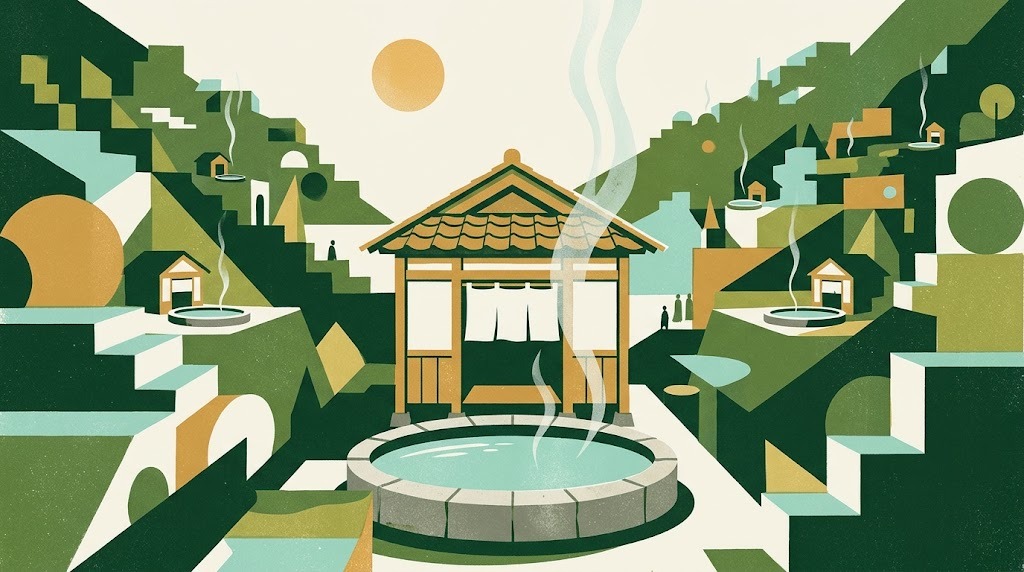
Yes, you can bathe in some of Beppu’s neighbourhood baths for ¥100, and the city publishes which ones take visitors. As of 1 May 2026, Beppu City’s community bath map lists 48 neighbourhood baths open to visitors, one of which now takes bookings only. Thirteen of them charge ¥100. Others are for members only, and the city marks those in green on its printed onsen map.
This guide works from the city’s own Japanese-language list. It covers which baths you may walk into, what they really cost, the hours that catch visitors out, and the few house rules local regulars care about. I haven’t bathed at these baths myself. Every price and hour below comes from Beppu City’s published pages, checked on 13 October 2026.
Not every bath in Beppu is open to you
Some of Beppu’s neighbourhood baths are for members only, and the city’s map says which. Beppu City defines a kyodo onsen (community bath) as one run by a neighbourhood association or a local onsen union. Many have the bath on the ground floor and a community hall upstairs. Counting the city-run baths, there are about 100 of them in Beppu.
Some community baths open the door to anyone. Others are for members only. On the city’s printed Beppu Onsen Facility Map, the dots are coloured by type:
| Dot colour | Meaning |
|---|---|
| Red | City-run bath |
| Blue | Other bath |
| Green | Members only |
The city’s web page is plain: the green baths are for union members only and do not take drop-in bathers. Its online map, which lists the baths that do accept visitors, also shows two members-only baths: Minami-Ishigaki Onsen and Nakatsuru Onsen, both marked “Not available”.
My rule
My rule of thumb: if a neighbourhood bath is not on the city’s online map, I would not walk in. A side door left open is not an invitation.
¥100 is real, but not at the famous baths
Thirteen of the 48 community baths on the city’s map charge visitors ¥100. Most city-run baths charge ¥200–300, and one is free. I counted every entry on the map (as of 1 May 2026):
| What you pay (adult visitor) | Community baths | City-run baths |
|---|---|---|
| Free | 0 | 1 |
| ¥100 | 13 | 0 |
| ¥150 | 3 | 0 |
| ¥200 | 25 | 4 |
| ¥250 | 1 | 3 |
| ¥300 | 5 | 3 |
| ¥600–800 | 1 | 0 |
| ¥700 | 0 | 2 |
| Total | 48 | 13 |
The ¥100 community baths are Shibu-no-yu, Kannawa Sujiyu, Shonin-yu and Jigokubaru Onsen in Kannawa, plus Kinei, Nanatsuishi, Nishi-Beppu, Minami-Suka, Kita-Matogahama-machi, Mochigahama, Wakakusa, Yamada and Ikime Onsen elsewhere in the city.
The two ¥700 city baths are Kannawa Mushiyu (a steam bath) and the spa complex Yutopia Hamawaki. The ¥600–800 entry is Yume Hinoki no Yu Daibutsu Onsen, a former members-only bath that since 2021 has been a private bath rented by the 45-minute slot, booked online by the day before or by phone on the day, so you cannot simply walk in.
At four baths, visitors pay more than residents. These community baths list two prices, one for residents of Beppu (市内の方) and a higher one for people from outside the city (市外の方):
- Kotobuki Onsen: ¥200 residents / ¥300 others
- Maeda Onsen: ¥100 / ¥200
- Yumigahama Onsen: ¥100 / ¥200
- Sumiyoshi Onsen: ¥150 / ¥300
I counted Maeda and Yumigahama at ¥200 in the table above, not ¥100.
At most city-run baths, such as Hamawaki Onsen, children of primary school age pay ¥100 and younger children bathe free. That ¥100 is a child price only: Furosen, near JR Beppu Station, charges adults (junior-high age and up) ¥250.
Check the hours: midday breaks and closures by date
More than half of the community baths close in the middle of the day, and some close on fixed dates of the month rather than a weekday. On the city’s map, 28 of the 48 community baths list two opening windows. Saiwai Onsen, for example, opens 6:30–11:00 and 14:00–23:00. Turn up at 12:30 and the door is shut.
Five community baths close on dates, not weekdays:
- Saiwai Onsen: the 10th of each month
- Shinoyu Onsen: the 5th, 15th and 25th
- Suehiro Onsen: the 15th
- Fujimi Onsen: the 15th
- Matsubara Onsen: the 5th and 20th
Wakakusa Onsen, one of the ¥100 baths, has no bathing 13:00–16:00 on the 15th of each month. A few open only later in the day: Kotobuki Onsen from 15:00 and Sumiyoshi Onsen from 16:00.
The city-run baths have their own pattern. Eight of them close 14:00–15:00 for cleaning, with no entry and no bathing in that hour. Hamawaki Onsen, for example, opens 6:30–25:00 (1:00 the next morning) but shuts 14:00–15:00. Shibaseki Onsen cleans 13:00–14:00. Most city baths also close one weekday a month. Takegawara closes on the third Wednesday, or the next day if that Wednesday is a public holiday. The city keeps a closing-day calendar for its own baths. For community baths, the hours are on the online map only.
Of the three free city baths, only one is open
Beppu City lists three free baths, but as of 13 October 2026 only Netsu-no-yu in Kannawa is open. Netsu-no-yu is open 6:30–21:00 at no charge, and closes only for its year-end clean-up day.
The other two are in Myoban, in the hills above Kannawa. Kakuju-sen has been closed since 16 March 2020 because of a problem with its spring (less water). The city says it will stay closed until further notice. Jizo-sen is listed as currently closed. Both pages still show “free” and their old hours further down, and the printed map marks both with 休 (closed). If a guide sends you up to Myoban for a free soak, check those two pages before you take the bus.
What to bring: towel, soap and coins
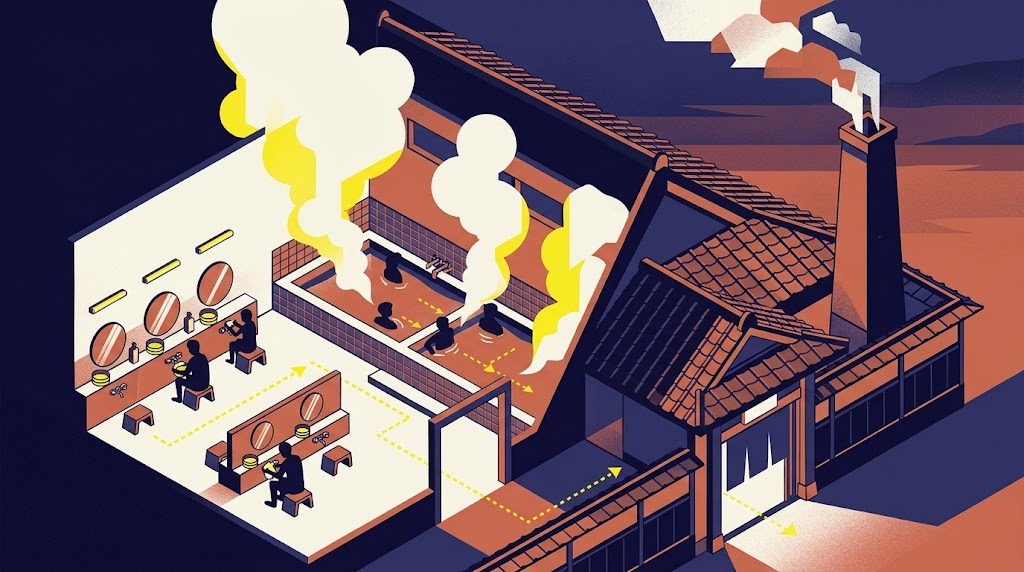
Expect no shower, no soap and no towel. The city’s English onsen site, Enjoy Onsen, says that most public baths in Beppu have no showers, soap, shampoo, conditioner, hair dryers or towels, so bring your own. Bring:
- A small towel for the bath and a larger one for drying off
- Soap and shampoo, if you want to wash
- Coins. The city’s map gives each bath’s price but not how to pay, so bring ¥100 coins rather than a ¥1,000 note
Takegawara is the exception for forgotten kit. The city’s page lists a towel at ¥350, a shampoo, rinse and soap set at ¥100, a free wash basin and ¥100 coin lockers.
Tattoos: the city’s English site lists Takegawara Onsen, Kannawa Mushiyu and Shibaseki Onsen on its tattoo-friendly bath list as baths that welcome guests with tattoos. For a small local bath that isn’t on its list, it advises asking politely before you pay.
The house rules regulars care about
Greet people, pour water over yourself before you get in, and don’t add cold water without asking. Junya Hanada, chairman of the Beppu Hatto Onsendo, set out these house rules on the city’s official tourism site:
- Say hello when you come in and goodbye when you leave.
- Scoop water from the bath and pour it over yourself before you get in.
- If the water is too hot, ask the people in the bath “May I add water?” before you turn the tap.
- Don’t sit on the edge of the bath. The page says this rule is rarely heard outside Beppu, and many people dislike it.
- Keep your towel out of the water, and tie long hair up.
The same page says that many Beppu homes have no bathtub, so the local bath is someone’s daily bath. It also says it is common for locals to greet newcomers with “Where are you from?” For the general etiquette (washing, nudity, towels), my guide to sento and onsen covers it.
A ¥100–300 day that avoids closed doors
Based only on the published hours, this is how I would plan a ¥100–300 day around Kannawa and central Beppu without hitting a closed door:
- Morning, Kannawa: Shibu-no-yu (¥100, 6:30–20:30) or Kannawa Sujiyu (¥100, 6:30–20:00). Netsu-no-yu (free, 6:30–21:00) is in the same area.
- Late morning: Kannawa Mushiyu, the herb steam bath (¥700). The city has set its hours at 7:30–19:30, last entry 19:00, from 1 October 2026 to 31 January 2027. It closes on the fourth Thursday (the next day if that Thursday is a public holiday), and only bathers of junior-high age and up may use it.
- 14:00–15:00: avoid the city-run baths. Eight of the 13 close for cleaning in this hour.
- Evening, central Beppu: Takegawara Onsen (¥300, 6:30–22:30, closed the third Wednesday), about a 10-minute walk from JR Beppu Station.
- Late night: Hamawaki Onsen (¥200) is open until 1:00.
What I could not settle
Not confirmed yet
- How you pay at an unstaffed community bath. The city’s map lists prices but not whether you pay at a desk, into a box or by another method. I found no official page that describes it. Bring coins.
- How many baths are members-only. The city says there are about 100 community baths including its own, and colours the members-only ones green on its printed map. It does not publish a count, and I did not count the dots myself.
- Whether a hotel guest pays the resident price. The four baths with two prices say “residents of the city” and “others”. None says how a hotel guest is treated, so I assume a visitor pays the higher price.
Quick answers
- Is Takegawara Onsen still ¥100?
- No. Beppu City lists the adult price at ¥300. ¥100 is the child price (primary school age).
- Should I buy a 10-visit ticket book for a short stay?
- No, unless you will bathe ten times. At Hamawaki, Nagaishi, Tanoyu and Hamada Onsen, a 10-visit book costs ¥1,800 against ¥200 a visit, and it is valid for one year. Nine visits cost the same either way, and the book saves money only from the tenth.
- Do I need to book Takegawara’s sand bath?
- No, and you can’t. The city says it takes no bookings by phone or online. Go to the counter. Up to eight people use it at once, so you may have to wait.
Prices, hours and closures checked on Beppu City’s pages on 13 October 2026; city-run bath prices rechecked on 14 October 2026.
— ko, writing from Niigata

Have a Question?