

Tokyo’s Hotel Tax Goes to 3% in April 2027, Minpaku Included
From 1 April 2027, Tokyo taxes stays of ¥13,000+ per person a night at 3% of the pre-tax room price, minpaku and dorm-style lodging included.
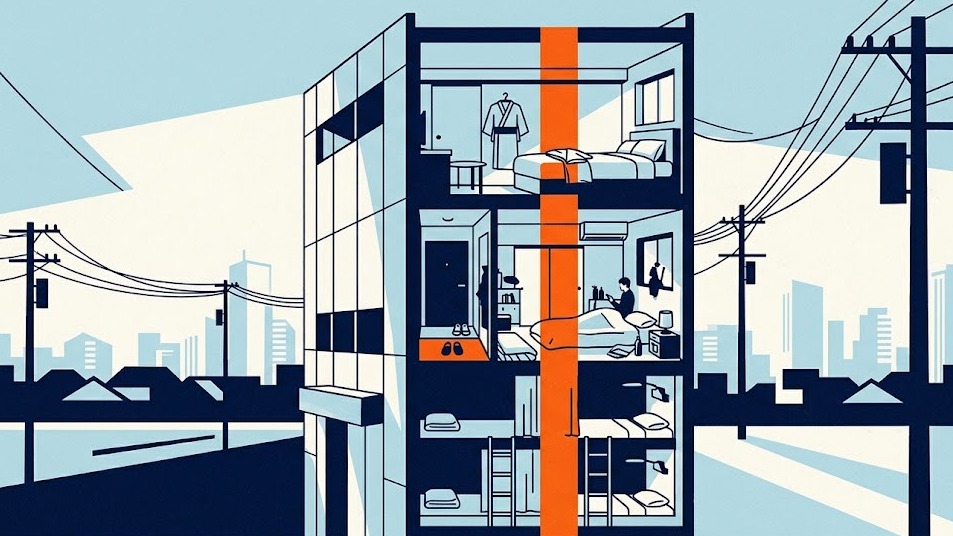
For nights from 1 April 2027, Tokyo’s accommodation tax becomes 3% of the room price per person per night, charged only when that price is ¥13,000 or more. For the first time it also covers simple-lodging places and private home rentals (minpaku), which pay nothing under the rules in force until 31 March 2027. The Tokyo Metropolitan Assembly passed the change on 27 March 2026, and the Tokyo Metropolitan Government confirmed the start date on 30 June 2026, after the Minister for Internal Affairs and Communications agreed to it.
The 3% is the easy part. The part that decides your bill is which price the 3% is taken from. It is not the total on your booking: it is the price per person, before consumption tax, without meals, but with any compulsory cleaning fee. That is where a family room, a dorm bed and a four-person apartment end up with very different bills.
What Changes on 1 April 2027
The flat fee becomes a percentage, the tax-free line rises from ¥10,000 to ¥13,000, and two new kinds of lodging join the list. The Tokyo tax bureau’s review page sets the two systems side by side:
| Until 31 March 2027 | From 1 April 2027 | |
|---|---|---|
| Who pays | Hotel and ryokan guests | Also simple lodging and minpaku guests |
| Tax-free below | ¥10,000 per person per night | ¥13,000 per person per night |
| Rate | ¥100 or ¥200 flat | 3% of the room price |
Until 31 March 2027, the tax bureau’s page for guests sets the tax at ¥100 for a room price of ¥10,000 up to (but not including) ¥15,000, and ¥200 for ¥15,000 or more. Under the amended ordinance, the tax is 3% of the per-person room price after it is rounded down to the nearest ¥100, and the rate article sets no maximum, so the tax keeps rising with the room price.
What that means per person per night (prices before consumption tax, calculated by me):
| Room price | Now | From April 2027 |
|---|---|---|
| ¥12,900 | ¥100 | ¥0 |
| ¥13,000 | ¥100 | ¥390 |
| ¥15,000 | ¥200 | ¥450 |
| ¥20,000 | ¥200 | ¥600 |
| ¥30,000 | ¥200 | ¥900 |
| ¥50,000 | ¥200 | ¥1,500 |
The cheapest taxed rooms pay less than they do now at the bottom of the range: anything from ¥10,000 to ¥12,999 drops from ¥100 to nothing. Above ¥13,000, every night costs more than under the current flat rates.
The Tax Is Worked Out Per Person, Not Per Room
The ¥13,000 line and the 3% both apply to each guest’s share of one night, so the same room can be taxed or tax-free depending on how many people sleep in it. The tax bureau’s guide for accommodation operators (PDF, Japanese) gives the rules:
- Start from one night’s price.On a multi-night booking without nightly prices, divide the total by the number of nights.
- Divide by the number of guests.Skip this step if the hotel sets a price per person.
- Round down to the nearest ¥100.A share of ¥16,275 becomes ¥16,200.
- Check the ¥13,000 line.Below ¥13,000 per person, there is no tax. At ¥13,000 or more, multiply the rounded figure by 3%.
The bureau’s own example: a ¥32,550 twin room. One guest pays ¥975 (¥32,500 × 3%). Two guests split it to ¥16,275 each, which rounds down to ¥16,200, so each pays ¥486, or ¥972 for the room. Add a third guest with a ¥6,000 extra bed and the share drops to ¥12,850 per person, so nobody pays the tax that night.
A guest beyond the room’s capacity who uses no extra bedding and is not charged, such as a child sharing a parent’s bed in a twin, is left out of the count: in the bureau’s example, two adults and a child in a ¥32,550 twin still split the price two ways, so each adult pays ¥486, or ¥972 for the room.
Charges that clearly belong to one guest are taken out first. In the bureau’s example, a ¥3,000 baby cot is treated as the baby’s own price, which is below ¥13,000, and the parents’ share stays at ¥16,275 each. The tax bureau’s Q&A for guests confirms that children pay the tax too when their own share reaches the line.
Which Price Counts: Before Tax, Without Meals, With Cleaning
The 3% is taken from the bare room price before consumption tax, not from what you see at checkout. According to the tax bureau’s guide, the room price:
- excludes consumption tax, hot-spring bathing tax and other taxes;
- excludes meals and drinks, banquets, parking and other services you choose;
- excludes tips you hand over voluntarily (Japan does not expect them anyway — see my guide to tipping in Japan);
- includes service charges on the room, and fees you cannot refuse, such as bedding, bathing, heating or air-conditioning, and cleaning fees.
The consumption tax step matters at the line. The National Tax Agency sets Japan’s standard consumption tax rate at 10%, so a room advertised at ¥14,000 including tax is about ¥12,727 before tax and is not taxed. One at ¥15,400 including tax is ¥14,000 before tax and pays ¥420 per person.
For a ryokan stay with dinner and breakfast, the meal portion comes out before the 3% is applied. If the meals are provided free, the bureau’s guide treats the whole price as the room price.
On a package tour, the tax is based on the per-person room price agreed between the tour company and the hotel, which you may not see. You cannot work it out backwards from the total you paid for the tour.
Minpaku and Simple Lodging: From Nothing to 3%
Private home rentals and simple-lodging places pay no Tokyo accommodation tax until 31 March 2027, and from 1 April 2027 they follow the same ¥13,000 and 3% rules as hotels. Simple lodging is the Inns and Hotels Act category for places built mainly around shared sleeping space — think dorm rooms. The minpaku covered are both kinds: those in national strategic special zones and those run under the Private Lodging Business Act.
Many minpaku will still stay outside the tax. The tax bureau’s Q&A on the review says many minpaku are low-priced, and Tokyo’s own estimate is that about 30% of minpaku facilities will be taxable.
The cleaning fee is the part rental guests tend to forget. The bureau’s guide adds a compulsory cleaning fee to the room price, and when it is charged once per stay, spreads it evenly across the nights. An optional mid-stay linen change does not count.
My worked example: an apartment at ¥30,000 a night (before consumption tax), with a ¥12,000 cleaning fee, booked for three nights.
| Guests | Per person per night | Tax for the stay |
|---|---|---|
| 4 | ¥8,500 | ¥0 |
| 2 | ¥17,000 | ¥3,060 |
With two guests, each night is (¥30,000 + ¥4,000 cleaning) ÷ 2 = ¥17,000 per person, so ¥510 each per night, and ¥510 × 2 guests × 3 nights = ¥3,060.
Booking Now for a Stay Around 1 April 2027
The rule that applies is set by the night you stay, not the day you book. The tax bureau’s guide judges each night by the date of stay in your booking: a room booked for the night of 31 March 2027 falls under the old rules even if you check in after midnight on 1 April.
So a booking made in late 2026 for a cherry-blossom trip in April 2027 pays the new tax on every night from 1 April. For nights up to 31 March 2027, hotels and ryokan still charge the old ¥100 or ¥200 on room prices of ¥10,000 or more per person, and minpaku and simple lodging pay nothing.
How You Pay It
You pay the tax to the place you stay, and the operator passes it to Tokyo. The tax bureau’s page for guests says you pay by whatever method the accommodation sets, and that hotels and ryokan may ask for it at the front desk, separately from your travel package price.
If you prepaid on a booking site, the tax may already be built into the room rate, shown as a separate line, or collected at the front desk. The bureau’s guide allows a receipt that simply notes the tax is included in the room charge. Look for “Accommodation Tax” on your booking or receipt, and if it is not mentioned, ask the property before you pay it a second time. The per-night amount for your room price is in the table above.
What I Could Not Settle
Not confirmed yet
- How booking sites and minpaku platforms will show it. I found nothing published by them on whether they will include the 3% in the price, collect it at booking, or leave it to the property. Tokyo’s rules only say the accommodation collects it. Check the “taxes and fees” line of your own booking.
Quick answers
- Should I book a cheaper room just to stay under ¥13,000?
- No. Just above the line the tax is 3% of the room price — ¥390 on ¥13,000 — so choose the room on its full price and add 3% to any option at ¥13,000 or more.
- Do foreign visitors pay more than Japanese guests?
- No. The tax bureau’s Q&A on the review says the tax is on the stay itself, so it does not change with nationality or place of residence.
- Do I pay for a night I booked but never slept in?
- Not if nobody stayed. The tax bureau’s guide counts a night as a stay even if you never use the bed, but the tax is charged per guest the property counts, and in its hold-room example a night with no guests is taxed ¥0. The guide does not cover no-shows or cancellation fees, so check your booking’s cancellation terms rather than expecting the tax to be added.
Rates and rules checked on the Tokyo tax bureau’s pages on 14 October 2026.
— ko, writing from Niigata
Have a Question?