

Japan Tax-Free Shopping from 1 Nov 2026: Pay Tax, Get It Back
From 1 November 2026, Japan's tax-free shops charge full price. You get the tax back only after a customs kiosk check before bag drop, within 90 days of buying.
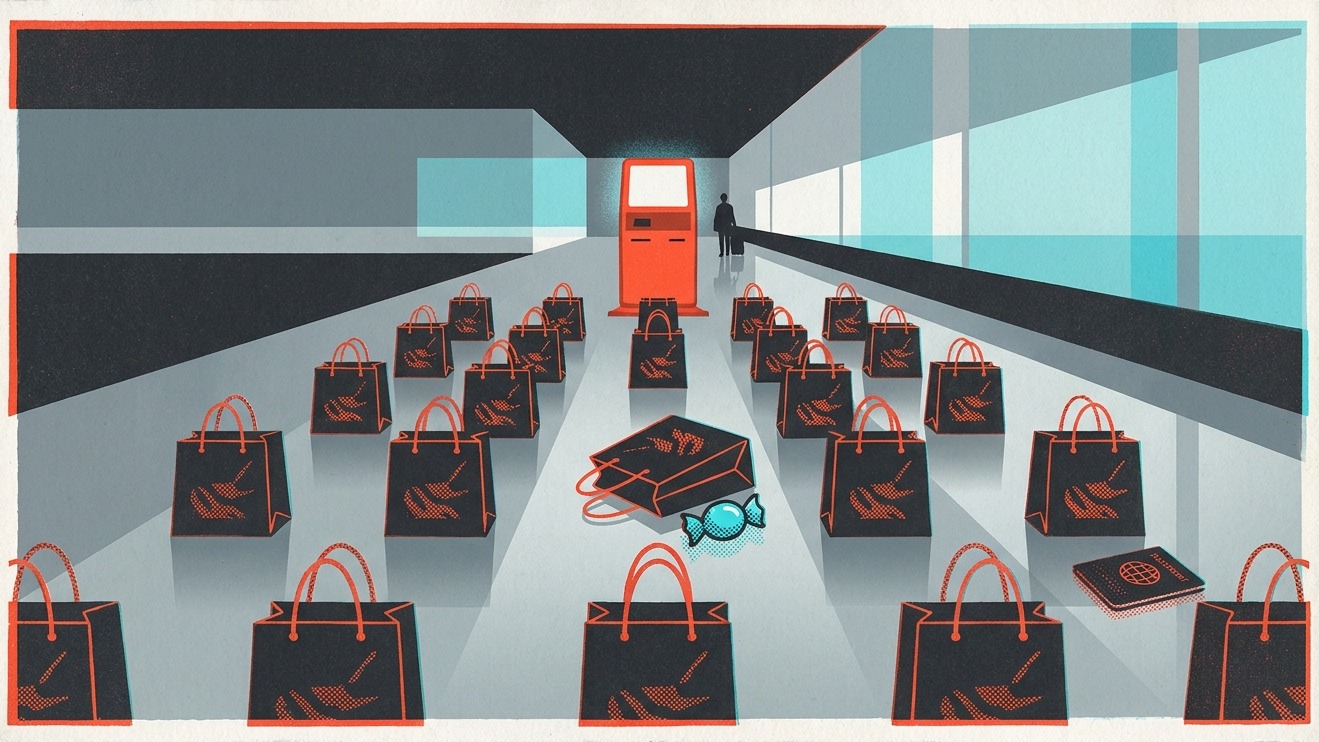
On 2 November 2026 you buy a ¥33,000 jacket at a tax-free shop in Tokyo, and the till charges you ¥33,000: the price with 10% consumption tax in it. Under the rules the Japan Tourism Agency describes for purchases from 1 November 2026, the ¥3,000 of tax, less any fee the shop or its refund company charges, comes back only after you pass a customs check at the airport or seaport when you leave Japan, within 90 days of the purchase, and it is paid by the shop or a refund company the shop appoints, not by the government.
Paying the full price is the easy part to understand. The parts that cost travellers money come later: a receipt is checked as a whole, the customs check has to come before you check in your bag, and the refund method and any fee are set by each shop. This guide follows one purchase in that order, from the till to the refund. It is not the only tax with a date attached for visitors: Tokyo’s accommodation tax changes for nights from 1 April 2027.
Which rules apply: the day you buy decides
Anything you buy on or before 31 October 2026 follows the old tax-free system; anything you buy from 1 November 2026 follows the new refund system, whatever day you fly.
The Japan Tourism Agency ties the switch to purchases made on or after 1 November 2026. Under the old system, a tax-free shop takes the tax off at the counter. Under the new one, which the agency calls the Refund Method, you pay the tax-inclusive price and get the tax back after customs confirms at departure that the goods are leaving Japan with you.
There is no period when shops can choose between the two. The National Tax Agency’s Q&A for shops (Q8 and Q9) says the new system applies to sales from midnight on 1 November 2026, with one exception: a shop that routinely books sales made between 0:00 and 1:00 as the previous day’s may treat sales made between 0:00 and 1:00 on 1 November 2026 as 31 October sales, under the old rules.
At the till: passport, ¥5,000 before tax, and what you can carry
You still need your passport, a spend of ¥5,000 or more before tax at one shop on one day, and goods you can carry out of Japan yourself.
- Who can buy. The Japan Tourism Agency’s list of eligible purchasers covers foreign nationals who have been in Japan for less than six months since entry, such as Temporary Visitors, and Japanese nationals who have lived outside Japan for two years or more, can prove it with a supporting document and have been back for less than six months.
- The minimum. The ¥5,000 threshold on the Japan Tourism Agency’s page for travellers is counted before tax, per shop, per day. At the standard 10% rate that is ¥5,500 at the till; for food and drink at the reduced 8% rate, which the Ministry of Finance applies to food and beverages other than alcohol and eating out, it is ¥5,400.
- What changes. According to the agency’s comparison of the old and new rules, the split between general goods and consumables, the ¥500,000 cap on consumables and the special sealed packaging for consumables are all abolished. Gold and platinum bullion and coins, and items exempt from consumption tax, are still excluded.
- How much. The agency’s FAQ for travellers limits purchases to what you can personally carry and take out of Japan when you leave.
The new part is the refund, and each shop runs it its own way. Questions worth asking before you pay (my suggestions, not official guidance):
- How will the refund be paid, and do I register it now? The agency’s FAQ says the shop explains how to register your refund method when you buy.
- Is there a fee? The agency’s FAQ for shops says the rules do not decide whether the traveller or the shop pays a refund company’s fee, and that the government itself charges no fee for refunds. For one example, PPIH, the group that runs Don Quijote, announced on 5 October 2026 that it will charge no refund fee from 1 November 2026, except the refund company’s fee if you take the refund in cash at the airport, and that these terms can change without notice.
- Is there a deadline to claim? The National Tax Agency’s detailed Q&A (Q59) gives shops the example of agreeing with travellers in advance that a refund not claimed within a set number of days will not be paid. Ask whether your shop has such a limit.
- Can you ship it abroad for me? The agency’s FAQ says this depends on the shop, and that the separate shipment method, where travellers posted their own tax-free goods home, was abolished on 31 March 2025. Shipping arranged by the shop is a different route. If you sign a shipping contract with an international carrier through the shop and hand the goods over at the counter, the National Tax Agency’s detailed Q&A (Q41) says the shop can sell at the price without tax, with no ¥5,000 minimum, and that you normally need no customs check when you leave, because the goods are exported as cargo.
Before you fly: one missing item cancels the whole receipt
Customs checks each receipt as one unit: if a single item on it is missing, eaten or used up, nothing on that receipt gets its tax back.
The Japan Tourism Agency’s FAQ for travellers says that if you do not have even one item from a single purchase, none of the goods on that receipt are eligible. The National Tax Agency’s detailed Q&A (Q37) gives the example of one receipt for three items at ¥3,000, ¥75,000 and ¥13,000, ¥91,000 in all: if only the ¥13,000 item is missing at the airport, none of the three can be confirmed. Receipts from different shops are judged separately, so a missing item from one shop does not touch a receipt from another.
The sealed bags for consumables are gone, but the rule behind them is not. The agency’s FAQ says that if food, drink, cosmetics or other consumables are consumed in Japan, you cannot get the customs confirmation, and if you have used up all or part of them, you should not use the kiosk but tell a customs officer at the counter instead.
Check this
In practice, that means buying anything you plan to eat, drink or open during your trip as a separate purchase without the tax-free procedure, and keeping the tax-free purchase whole until the airport. The tax-free purchase still has to reach ¥5,000 before tax on its own.
If a single item costs ¥1,000,000 or more before tax, the agency’s FAQ says customs may ask to see a certificate of authenticity or a warranty along with it. Pack those with the item, not in your checked bag.
At the airport: kiosk first, bag drop second, within 90 days
Do the customs check at a tax-free kiosk in the international departure lobby before you check in any bag, and within 90 days of the purchase.
The 90 days start the day after you buy. In the National Tax Agency’s detailed Q&A (Q36), a purchase on 1 November 2026 must be confirmed by 30 January 2027. The steps, from the Japan Tourism Agency’s page for travellers:
- Find the kiosk before check-in.Kiosks and the customs inspection area are in the international departure lobby, before baggage check-in.
- Scan your passport with every item with you.You must have all your tax-free purchases on you when you scan; the agency’s FAQ says the result appears a few seconds after the scan.
- Green means done; red means show the goods.On a red result, take the goods to the customs inspection area.
- Only then check in your bag.The check cannot be done once your purchases are in a checked bag, and the agency says a checked bag cannot be pulled back for the tax-free procedure.
At seven airports (Narita, Haneda, Kansai, Chubu, Fukuoka, New Chitose and Naha), the agency’s FAQ says you can do the same check on your phone through Visit Japan Web instead of the kiosk, inside the departure lobby’s dedicated Wi-Fi area up to the security checkpoint. The National Tax Agency’s detailed Q&A (Q33) says you need to have registered on Visit Japan Web before the check. At Kansai, the Osaka Customs guide for Kansai International Airport recommends the Wi-Fi method because the kiosks may be congested; its maps show 12 kiosks in Terminal 1 and 4 in Terminal 2.
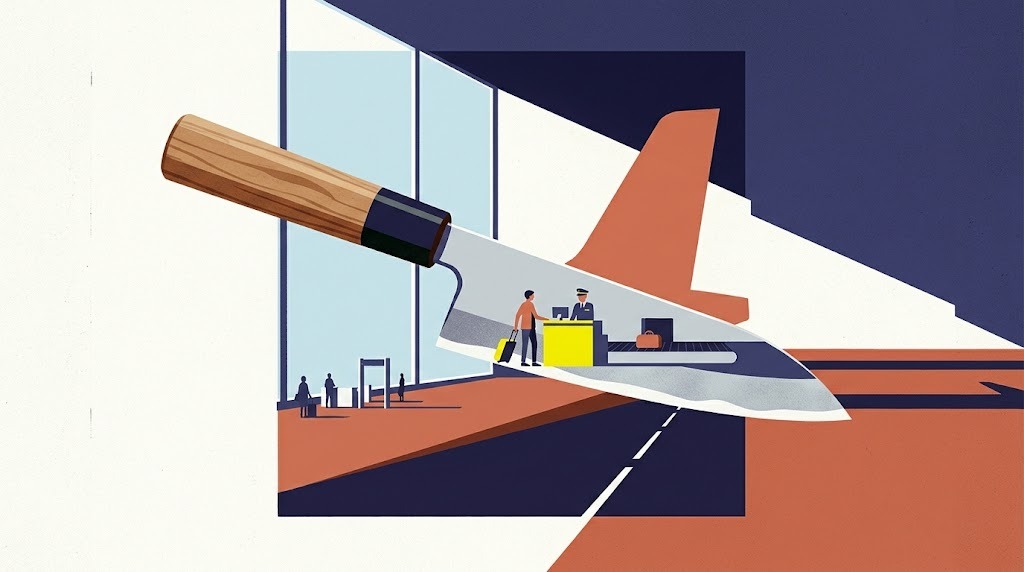
If you fly a domestic leg first, for example on one of the budget flights across Japan, the check happens at the airport where you leave Japan, not where you start. Time is your problem, not the airline’s: the Japan Tourism Agency says that if you stop an inspection to make your flight, the check counts as not done, and that neither the airline nor customs compensates you for a flight missed because of the tax-free procedure. If one of your purchases is a kitchen knife, which can only fly in a checked bag, the order matters even more; I set it out in the knife guide.
After customs: the shop pays you, not the government
Once customs confirms the goods are leaving, the shop or its refund company pays the tax back by the method you set up at the shop; the government only confirms the export.
The National Tax Agency’s refund page says consumption tax law sets no rules for how the refund is paid, and gives bank transfer, credit card, app transfer and cash at the departure port as examples. The Japan Tourism Agency’s FAQ says the refund is generally paid after the tax-free sale is confirmed through the customs check, and refers you to the shop for details.
Confirmation also creates an obligation. The National Tax Agency’s notice to foreign travellers says goods confirmed by customs must be exported without delay; if they are not, the exempted tax is collected and you are subject to a penalty.
What I could not settle
Not confirmed yet
- Purchases on or before 31 October 2026, taken out after 1 November. The old rules apply to them, but the Japan Tourism Agency’s and the National Tax Agency’s pages for travellers describe only the new airport procedure. If you hold old-system purchases, ask customs at your departure airport how to present them.
- Refund fees and payment times, shop by shop. No government page lists them, and the rules leave them to each shop and its refund company. The PPIH announcement above is the only shop policy I have checked.
Quick answers
- Should I shop tax-free early in a four-month trip?
- No, not for anything you plan to carry home. The Japan Tourism Agency lets you buy tax-free until you have been in Japan for six months, but its page for travellers requires the customs check within 90 days of each purchase, so anything bought more than 90 days before you fly out, such as in the first weeks of a 120-day stay, cannot get its tax back. Save tax-free shopping for the last 90 days, or, for something you want to buy early, ask the shop whether it can ship it abroad from the counter, which the National Tax Agency’s detailed Q&A (Q41) treats as an export with no airport check in the normal case.
- Can I use a camera or shoes I bought tax-free before I leave?
- Yes. The National Tax Agency’s detailed Q&A (Q39) says goods other than consumables can still be confirmed if they are used in Japan, as long as they leave with you. It also warns that separating goods from their box or bag, or throwing away packaging that shows the model number, may leave customs unable to identify them, so keep them as you bought them.
- I lost my passport, got a new one in Japan and kept shopping. Do the purchases on the old passport still count?
- Yes, if you tell customs. The National Tax Agency’s detailed Q&A (Q35) covers a traveller who shopped tax-free on the old passport, had a new one issued at a consulate in Japan and shopped tax-free on that too: scan the new passport at the kiosk and tell a customs officer at the counter that you also bought tax-free goods on the old passport, so those purchases can be confirmed as well.
Rules and sources checked on 23 October 2026.
— ko, writing from Niigata
Have a Question?