

Mochi at New Year: Tokyo Fire Department’s Choking Warning
Tokyo Fire Department area, 2020–2024: 338 people taken to hospital after choking on mochi or similar foods, 135 of them in January. How to eat mochi safely.
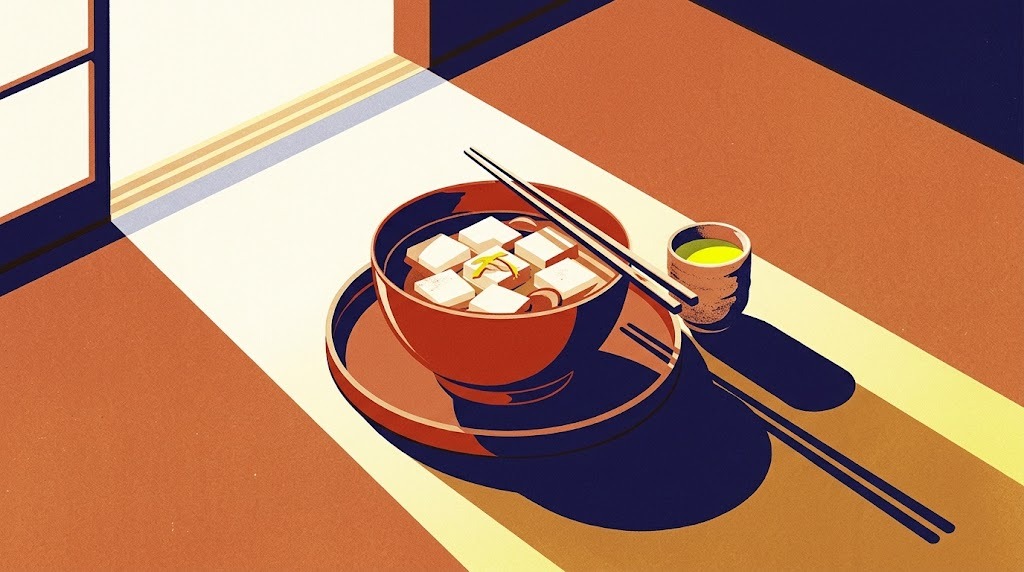
The official advice in Japan is about how to eat mochi, not whether to — and it is the New Year food that the Tokyo Fire Department and the national Consumer Affairs Agency single out in their winter safety warnings. In the Tokyo Fire Department’s area, 338 people were taken to hospital after getting mochi or similar foods stuck in their throat between 2020 and 2024, and 135 of those cases were in January alone, according to the department’s mochi warning page. The risk sits overwhelmingly with older people, so this matters most if you are travelling with parents or grandparents.
English-language introductions to mochi tend to stop at the taste and the ceremony. The practical part — cut it small, wet your throat first, chew slowly, and keep an eye on the older people and small children at the table — is so routine in Japan that it rarely gets written down for visitors. The Tokyo Fire Department puts it in writing in December: I found its warnings for every December from 2017 to 2021, and for 2024 and 2025. This guide puts its advice, and the national government’s first-aid steps, in one place; if your trip spans the New Year, my guide to New Year closures covers the other thing to plan around: which offices and banks shut, and from when.
Why the warnings come in December
People choke on mochi at New Year because that is when they eat it, and because mochi changes as it cools. Mochi turns up in ozōni (New Year soup) and other New Year dishes, and the Consumer Affairs Agency‘s New Year warning of 23 December 2025 points out that for many people the New Year meal is the first mochi they have eaten in a long while.
The Tokyo Fire Department‘s mochi page says these accidents rise every year from December into January. The December warnings have a track record. The Tokyo Metropolitan Government’s consumer-safety site reposted the department’s December mochi campaign in each December from 2017 to 2021 (see the 2021 repost). The department’s press release of 27 December 2024 repeated the advice to cut mochi small, and the current version of its mochi page is dated 12 December 2025.
The Tokyo Fire Department’s own figures for 2020–2024 (its area covers Tokyo except Inagi City and the islands, and “mochi” includes dango and similar foods):
| Month | People taken to hospital |
|---|---|
| January | 135 |
| December | 42 |
| Other 10 months (338 − 135 − 42) | 161 |
| Total, 2020–2024 | 338 |
January and December together account for 177 of the 338 cases, which the department describes as more than half of the total. January, the largest month, is more than three times December, the second largest.
Other official figures show the same January peak. The Consumer Affairs Agency‘s full December 2025 warning cites earlier Tokyo Fire Department data: of 353 people aged 65 and over taken to hospital after choking on mochi in 2019–2023, 138 were in January. For the whole country, the government’s public-information site reports a Consumer Affairs Agency analysis of mochi choking deaths among older people in 2018–2019: 43% happened in January and 14% in December, with the first three days of the year the worst.
One thing visitors are rarely told: mochi that looks soft in a bowl of hot soup does not stay that way. The Consumer Affairs Agency explains that mochi gets harder as it cools, and stickier too, so by the time it is passing down the throat it is firmer than it looked in the bowl and more likely to stick to the throat. The agency also cites research that found mochi was the most common food among choking cases.
Who is actually at risk
This is mainly a risk for people aged 65 and over, not for the average visitor. The Tokyo Fire Department says about 90% or more of the 338 people taken to hospital were 65 or older, that cases rise from age 65 and peak among people in their 80s, and that about 70% were judged to be in moderate or worse condition when first examined.
The department’s case examples are blunt: a person in their 80s who choked on the mochi in their ozōni at home and died, and a person in their 70s who was seriously injured.
The national picture is broader than mochi. Citing the health ministry’s 2024 vital statistics, the Consumer Affairs Agency reports 4,383 deaths in Japan from choking on food of any kind in 2024, 3,992 of them (about 91%) among people aged 65 and over. That figure covers all foods, not mochi alone, so it should not be read as a mochi death toll.
If you are a healthy adult eating one piece of mochi at a hotel breakfast, these numbers are not about you. If you are bringing a parent in their 70s or 80s to a New Year meal, they are.
How to eat mochi the way the warnings describe
The Tokyo Fire Department‘s advice is five short points, and the Consumer Affairs Agency’s list says almost the same thing:
- Cut it small. Cut mochi into pieces that are easy to eat. The Consumer Affairs Agency adds: keep each mouthful to an amount you can manage comfortably. For an older family member, ask for it to be cut before it is served.
- Wet your throat first. Drink some tea or soup before you eat mochi. Both the Consumer Affairs Agency and the government’s public-information site add a warning: washing down mochi you have not chewed properly with tea is dangerous.
- Chew slowly before swallowing. Don’t swallow in a hurry.
- Watch the table. When eating with small children or older people, keep an eye on how they are eating.
- Know the first aid before you need it. (Next section.)
The department sums it up as awatezu, yukkuri, yoku kande — don’t rush, go slowly, chew well.
If someone chokes: the steps, in order
If someone cannot breathe after swallowing mochi, call for help, have someone dial 119 and fetch an AED, and start trying to clear the airway straight away. The Tokyo Fire Department gives the steps in this order. The government’s public-information site adds abdominal thrusts:
- Shout for help.Ask someone to call 119 and bring an AED, and start clearing the airway at once. If you are alone and nobody comes, the Tokyo Fire Department says to skip the call and start clearing the airway immediately; the government site says that while the person still responds, clearing the airway comes before calling.
- Let them cough.If they respond and can cough, let them cough as hard as they can.
- Back blows.If they cannot cough, strike firmly between the shoulder blades several times or more with the heel of one hand. The Tokyo Fire Department’s page illustrates a separate position for infants.
- Abdominal thrusts.If back blows do not bring the mochi out, use abdominal thrusts (the Heimlich manoeuvre). The government site says this method must not be used on infants, pregnant women or people with severe obesity. (The Tokyo Fire Department’s mochi page describes back blows only.)
- Start CPR.If they stop responding, start CPR immediately.
Watch out
If you used abdominal thrusts, the government site says to tell the ambulance crew or get the person seen by a doctor promptly, even if the mochi came out, because the thrusts can injure internal organs. It also says that if you lose track of what to do, call 119 and the dispatcher will tell you.
These are the official Japanese public guidelines in summary. They are not a substitute for first-aid training.
Calling 119 if you don’t speak Japanese
119 is the number for an ambulance (and fire) anywhere in Japan, and most fire departments can take a call in English through an interpreter. In Tokyo, the Tokyo Fire Department says its two emergency call centres always have English-speaking staff on duty, and since 1 July 2017 it has also used a three-way interpretation service for English, Chinese, Korean, Portuguese and Spanish, with interpreters covering other languages as far as possible.
Nationally, the Fire and Disaster Management Agency reports that, as of 1 January 2025, 673 of Japan’s 720 fire departments (93.5%) used the three-way phone-interpretation service, which runs 24 hours a day, 365 days a year. All of those departments handle English, Chinese and Korean. The flip side: 47 fire departments did not have the service at that date, and the agency’s table does not let a visitor see which ones.
The Japan National Tourism Organization also runs the Japan Visitor Hotline, 050-3816-2787, 24 hours a day, all year round, for tourist information and help after accidents and emergencies, in English, Chinese and Korean. For an ambulance, call 119 first.
What I could not settle
Not confirmed yet
- The 2026–27 figures. The Tokyo Fire Department page I used was last updated on 12 December 2025 and covers 2020–2024. If the department updates the page for the 2026–27 season, the numbers above may change.
- Mochi deaths nationally, for a recent year. The 4,383 figure covers choking on all foods. The most recent mochi-specific national analysis I found is the Consumer Affairs Agency’s December 2020 release on deaths of people aged 65 and over in 2018–2019 (the 43% January figure above); I have not found a newer national mochi-only figure.
- Which fire departments lack interpretation. The Fire and Disaster Management Agency publishes coverage by prefecture, not a list a traveller could check for a specific town.
Quick answers
- Should I avoid mochi altogether?
- No. If you are a healthy adult, eat it the way the warnings describe: cut it small, drink some tea or soup first, and chew it well. If someone in your group already has trouble chewing or swallowing, the official pages I read give no separate rule for them, so ask their own doctor before the trip.
- Can I give a small child a whole piece of mochi?
- No. Cut it small and watch the child eat. None of the official pages I read sets an age for mochi, so I can’t tell you when a child is old enough. The Tokyo Fire Department tells families to watch infants and young children while they eat mochi, and the Consumer Affairs Agency‘s child-safety advice says children’s chewing and swallowing are weaker than adults’, that sticky foods are among those most likely to cause choking, and that food should be cut small — without letting a child put several cut pieces in their mouth at once.
- Why are older people so much more at risk?
- The Consumer Affairs Agency‘s December 2025 warning lists the changes that come with age: weaker teeth and bite, less saliva, a weaker swallow that leaves food behind in the throat, and a weaker cough to push it back out. Put that together with mochi hardening as it cools, and the New Year meal is when the two meet.
Figures and first-aid steps checked on 14 October 2026.
— ko, writing from Niigata
Have a Question?